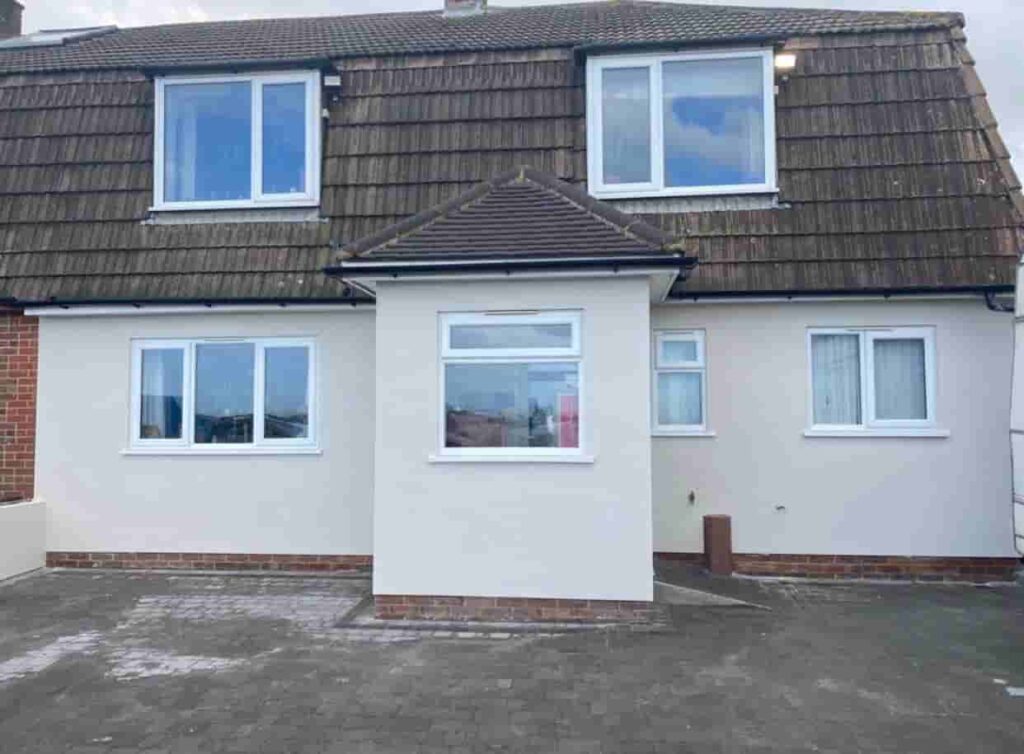
A hip roof is recognised by its sloping sides, which typically meet at hips and a ridge rather than creating large vertical gable ends. This design can provide a strong and effective roofing structure, but like any roof, its long-term performance depends on several components working together correctly.
Certain parts of a hip roof experience greater exposure to wind, rainfall and natural movement than others. Hip lines, ridge tiles, roof edges, valleys where present, flashing and individual tiles can all develop defects over time. Damage in these locations may initially appear minor but can create routes for water to reach the materials beneath the external covering.
For homeowners in Salisbury, Wiltshire, knowing which areas deserve particular attention can make it easier to recognise potential problems before they spread. Prompt inspection and proportionate repairs can help protect serviceable sections of the roof while addressing the specific components that have deteriorated.
What Parts of a Hip Roof Are Most Likely to Need Repair?
The most vulnerable parts of a hip roof are generally those where roof slopes meet, where the covering finishes at an edge or where roofing materials connect with another feature. These locations contain additional joints and detailing compared with the uninterrupted central areas of a roof slope.
However, vulnerability does not mean these areas will automatically fail. Correct installation, suitable materials and ongoing maintenance can provide dependable performance for many years.
Problems arise when tiles become damaged or displaced, fixings weaken, mortar deteriorates or weatherproof junctions no longer perform as intended.
Hip Lines Are Particularly Important
The diagonal lines where two roof slopes meet are known as hips.
These prominent sections are directly exposed to weather and form an important part of the roof’s overall weather protection. Hip tiles or other associated components need to remain correctly positioned and secure.
If deterioration occurs along a hip, rainfall can potentially reach areas where the adjoining roof slopes meet.
Hip Tiles Can Become Loose
Hip tiles sit in an exposed position and can experience significant weathering.
Depending on the roof construction and fixing method, movement or deterioration can eventually cause individual sections to become loose. Once this happens, the surrounding area may become more vulnerable to further movement during windy conditions.
A loose hip tile deserves attention even if it has not yet become completely displaced.
Mortar Around Hip Tiles Can Deteriorate
On roofs where mortar forms part of the hip detail, its condition is important.
Repeated exposure to weather can contribute to cracking, loosening or deterioration over time. Small defects may gradually become more noticeable, particularly if sections begin separating from the surrounding roofing materials.
Repairing deteriorated details at an appropriate stage can help maintain the integrity of the hip line.
Ridge Tiles Are Another Exposed Area
Where the upper sections of roof slopes meet, the ridge forms another important junction.
Ridge tiles are exposed to wind and changing weather conditions throughout the year. If their fixing or surrounding material deteriorates, movement can develop.
Because the ridge occupies a prominent position at the top of the roof, maintaining its stability is important for the surrounding covering.
Loose Ridge Tiles Can Affect Nearby Roofing
A ridge problem does not necessarily remain confined to one tile.
Movement can place additional strain on adjoining sections, while a displaced ridge component can expose parts of the roof beneath. Continued wind can then increase the extent of the problem.
Early attention can help prevent a localised ridge defect from becoming more disruptive.
Roof Edges Experience Significant Weather Exposure
The edges of a hip roof are directly exposed to wind.
Airflow around the perimeter can place different pressures on the covering compared with more sheltered central sections. Tiles or components that have already weakened may therefore become more susceptible to movement.
After particularly windy conditions, visible changes around roof edges can provide an early indication that inspection is worthwhile.
Wind Can Expose Weak Tile Fixings
A tile can appear correctly positioned while its fixing has begun to weaken.
Strong winds may then cause movement that was not previously visible. Once one tile shifts, surrounding pieces can become more exposed to wind and rainfall.
A professional inspection can determine whether the problem involves one tile or whether nearby fixings and materials also need attention.
Corners of the Roof Need Careful Detailing
The corners of a hip roof bring several roofing elements together.
These areas need to manage rainfall while maintaining secure connections between roof slopes and perimeter details. Small weaknesses can sometimes develop where different components meet.
Because corners are highly exposed, defects should be investigated before further weather contributes to additional movement.
Individual Roof Tiles Can Still Be Vulnerable
The distinctive hip details are not the only parts that can require repair.
Tiles across the main roof slopes can crack, slip or become damaged. A single affected tile may expose the underlay or surrounding construction even when the rest of the slope remains in good condition.
Prompt replacement or repair of isolated damaged tiles can help keep the problem localised.
Cracked Tiles Are Not Always Obvious From Ground Level
A roof tile does not need to be missing before it becomes vulnerable to water ingress.
Small fractures can be difficult to see from below, particularly when the tile remains in its original position. Rainfall may nevertheless find a route through the damaged area.
This is why unexplained water ingress can require closer inspection even when the roof appears complete from ground level.
Slipped Tiles Can Disrupt the Intended Overlap
Roof tiles rely on correct positioning and overlap to direct rainfall down the slope.
When one tile slips, the arrangement changes and areas that should remain covered may become exposed. The displaced tile can also affect how surrounding tiles sit.
Correcting the problem involves restoring the intended arrangement rather than simply improving appearance.
Valleys Can Be Vulnerable Where They Form Part of the Roof Design
Some hip roof configurations include valleys where adjoining sections of roof meet internally.
Valleys carry concentrated amounts of rainfall and therefore need to remain clear and serviceable. Problems with the valley itself or surrounding tiles can create a significant route for water ingress.
Because large amounts of rainfall may pass through these areas, even relatively small defects can become noticeable during prolonged wet weather.
Debris Can Affect Valley Drainage
Leaves and other debris can collect within roof valleys.
If accumulation restricts the normal flow of water, rainfall may not move away as efficiently as intended. Persistent debris can also make it harder to identify developing defects beneath it.
Keeping important drainage routes functioning correctly forms part of sensible roof maintenance.
Flashing Around Roof Junctions Needs Attention
Hip roofs may include various junctions where the main covering meets other parts of the property.
Flashing helps prevent water entering these changes in surface. If it becomes displaced, damaged or deteriorated, moisture can find a route behind otherwise serviceable roofing materials.
A flashing defect can therefore create a leak even when nearby tiles remain in good condition.
Roof Penetrations Create Additional Vulnerable Junctions
Any feature passing through or interrupting the roof covering requires careful weatherproof detailing.
The surrounding area needs to accommodate the change while continuing to manage rainfall effectively. Over time, these junctions can become vulnerable if materials move or deteriorate.
When investigating a leak, these areas should be considered alongside the main roof covering.
Eaves Are Important to Water Management
At the lower edge of each roof slope, the eaves form part of the transition between the roof covering and the rainwater system.
Water needs to travel cleanly from the roof into the guttering. Problems around the lower courses of tiles or associated components can interfere with this process.
The eaves should therefore be considered when assessing the overall condition of a hip roof.
Guttering Can Influence Conditions Around the Roof Edge
Although gutters are separate from the primary roof covering, their performance affects how rainfall is managed once it reaches the bottom of the slope.
If water cannot clear effectively, overflowing or persistent moisture around roof edges can develop. This does not necessarily indicate failure of the tiles themselves.
Looking at the complete water-management system helps avoid misdiagnosing the source of a problem.
Underlay Can Become Important When the Outer Covering Is Compromised
The external tiles provide the primary protection against weather, but the layers beneath also contribute to roof performance.
If a tile becomes cracked or displaced, underlay may help manage limited moisture reaching beneath the covering. However, older or damaged underlay may no longer provide the same level of secondary protection.
Where accessible and relevant, its condition can help determine the appropriate scope of repair.
Battens and Fixings Are Hidden but Important
Many of the components responsible for keeping tiles correctly positioned cannot be seen during an ordinary ground-level inspection.
Battens and fixings support the external covering and help maintain its alignment. If deterioration occurs beneath apparently serviceable tiles, movement may begin appearing across the surface.
This demonstrates why the visible tile is not always the original cause of a roofing problem.
Previous Repair Areas Deserve Occasional Attention
A professionally completed repair should integrate effectively with the surrounding roof, but older repair areas can still provide useful information during future inspections.
If defects repeatedly appear around the same location, there may be an underlying reason that deserves further investigation. Repeated movement, water concentration or deterioration of surrounding components could all contribute.
Understanding why a problem returns is preferable to continually treating the same visible symptom.
Weather Can Reveal Problems That Were Already Developing
Strong wind or heavy rainfall is often blamed for roof damage, but poor weather sometimes exposes an existing weakness rather than creating it entirely.
A slightly loose tile may remain unnoticed during calm conditions before moving during stronger winds. Similarly, a small junction defect may only become apparent when rainfall is prolonged or wind-driven.
After severe weather, changes in the roof’s appearance or new internal damp should therefore be investigated.
Internal Water Marks May Not Sit Below the Damaged Area
Water can travel once it passes beneath the external roof covering.
It may move along underlay, timbers or other surfaces before eventually becoming visible inside the property. As a result, a ceiling stain does not necessarily identify the precise location of the external defect.
Accurate diagnosis requires consideration of the roof construction and likely route of the moisture.
Several Small Defects Can Be More Significant Than One
A single slipped tile may represent a straightforward localised repair.
If several hip tiles, ridge sections and roof tiles show deterioration simultaneously, however, the pattern can indicate a broader maintenance requirement. Treating each defect independently without considering the complete roof may overlook a common cause.
Professional assessment helps determine whether damage is isolated or more widespread.
Early Repairs Can Protect Surrounding Roofing Materials
A small defect can become more significant if it remains exposed.
Water entering around a damaged tile or hip detail may reach battens, underlay and other components that were previously serviceable. Movement can also place additional stress on neighbouring tiles.
Prompt attention helps limit this secondary deterioration.
Not Every Hip Roof Problem Requires Extensive Work
Damage to a prominent part of a hip roof can look concerning, but extensive replacement is not automatically necessary.
Where the wider roof remains in satisfactory condition, localised repairs may be sufficient to restore the affected area. This could involve individual tiles, a defined section of hip or another particular junction.
The extent of work should be based on the condition found rather than assumptions about the complete roof.
Why Professional Hip Roof Repairs Add Value
Hip roofs contain several exposed junctions that need to work together with the main roof covering.
At MCM Roofing Repairs Salisbury, we assess visible damage alongside hip lines, ridges, tiles, relevant junctions and likely routes of water ingress. This helps identify whether the defect is confined to one component or involves a wider section of the roofing system.
For properties in Salisbury, Wiltshire, this condition-led approach allows repairs to focus on the areas that genuinely require attention while preserving serviceable roofing wherever appropriate.
Regular Attention Helps Maintain the Complete Roof
The durability of a hip roof depends on more than keeping its main slopes covered.
Hip and ridge details, roof edges, individual tiles, flashing, valleys and drainage all contribute to the roof’s overall ability to manage weather. Maintaining these areas as a complete system helps prevent one developing weakness from unnecessarily affecting surrounding components.
Identifying changes early is therefore an important part of keeping an established hip roof performing effectively.
Conclusion
The most vulnerable areas of a hip roof are generally its exposed junctions and edges, particularly hip lines, ridge tiles, corners, valleys where present, flashing and individual tiles that have become damaged or displaced. These areas experience significant exposure to wind and rainfall and often contain more complex detailing than the central sections of a roof slope.
A defect in one of these locations does not automatically mean the entire roof requires extensive work. Many problems remain localised when identified promptly, allowing serviceable roofing materials to remain undisturbed.
If you have noticed loose tiles, deterioration around a hip or ridge, signs of water ingress or another problem with a hip roof in Salisbury, Wiltshire, contact MCM Roofing Repairs Salisbury. We can assess the affected area, identify the likely cause and recommend appropriate hip roof repairs based on the condition found.
Call us on: 01722 548 992
Click here to find out more about MCM Roofing Repairs Salisbury
Click here to complete our contact form and see how we can help with your roofing needs.